

 More
More

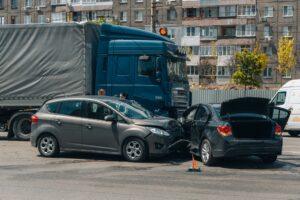
A serious truck accident in Brooklyn often involves more than vehicle damage. Many victims face significant injuries, medical expenses, and time away from work. It is common to assume the truck driver is the only person responsible, but commercial trucking cases rarely end there.
Responsibility may extend to the trucking company, the owner of the tractor or trailer, maintenance contractors, cargo loaders, freight brokers, or even a government entity responsible for unsafe road conditions. Each of these parties has defined legal duties under New York law. When those duties are breached and a crash occurs, multiple defendants may share liability.
Identifying every responsible party affects the compensation available for medical expenses, lost income, and long-term care. Finz & Finz, P.C. offers free case evaluations to help you understand who may be liable in your Brooklyn truck accident case.
Key Takeaways About Truck Accident Liability Brooklyn Residents Need to Know
- Truck accident cases in Brooklyn frequently involve multiple liable parties, each carrying separate insurance policies that may contribute to a victim’s compensation.
- The trucking company often bears liability alongside the driver through a legal principle called respondeat superior, which holds employers responsible for employee negligence committed during the scope of employment.
- Federal FMCSA regulations set strict standards for commercial trucking, and violations of those standards may serve as direct evidence of negligence in a Brooklyn truck accident lawsuit.
- Claims against New York City or State government entities require a notice of claim within 90 days of the accident, far shorter than the standard three-year statute of limitations.
- Independent contractor labels do not always shield trucking companies from liability, especially when the carrier exercises significant control over how the driver operates.
Can the Truck Driver Be Sued After a Brooklyn Crash?
The driver is typically the most obvious defendant in any Brooklyn truck accident lawsuit. Commercial truck drivers who hold a commercial driver’s license (CDL) face a higher standard of care than ordinary motorists. When a trucker’s negligence causes a crash, that driver may face personal liability.
Common Forms of Truck Driver Negligence
Truck drivers operating on Brooklyn’s congested roads may commit a range of negligent acts that lead to serious or fatal collisions:
- Violating FMCSA hours-of-service rules by driving while fatigued
- Speeding, especially on routes like the Gowanus Expressway or Flatbush Avenue where truck traffic mixes with dense pedestrian activity
- Distracted driving, including texting or using a phone behind the wheel
- Driving under the influence of alcohol or drugs
- Disregarding New York traffic laws, including posted truck route restrictions
A driver who violates any of these standards may face personal liability for the injuries and damages that result. However, individual truck drivers rarely carry enough personal assets or insurance to fully compensate victims with catastrophic injuries. That reality pushes the investigation toward the company that put the driver behind the wheel.
How Does Trucking Company Liability Work in New York?
The trucking company, also known as the motor carrier, is often the most significant defendant in a Brooklyn truck accident case. New York law allows injured victims to hold a trucking company liable through several legal theories, and often more than one applies.
Respondeat Superior and Vicarious Liability
Under the legal doctrine of respondeat superior (Latin for “let the master answer”), an employer bears liability for the negligent acts of an employee committed within the scope of employment.
If a truck driver causes a crash in Brooklyn while hauling a load for the carrier, that carrier may face vicarious liability for the driver’s negligence, even if the company itself did nothing wrong.
New York Vehicle and Traffic Law § 388 reinforces this principle by making the owner of a motor vehicle liable for injuries caused by anyone operating that vehicle with the owner’s permission. This statute applies to tractor owners and trailer owners independently, meaning the owner of a non-owned trailer may face liability for the negligence of the driver pulling it.
Direct Negligence by the Trucking Company
A trucking company may also face liability for its own independent acts of negligence. Brooklyn truck accident claims commonly involve allegations of:
- Negligent hiring, such as bringing on drivers with poor safety records, prior DUI convictions, or insufficient qualifications
- Negligent training, including failure to provide adequate instruction on safe driving practices and federal safety regulations
- Negligent supervision, such as ignoring driver complaints about unsafe conditions or failing to monitor compliance with hours-of-service rules
- Negligent retention, meaning the company kept a driver on staff after accidents, violations, or documented safety concerns
- Pressuring drivers to violate hours-of-service limits or maintain unsafe delivery schedules
Each of these failures represents a separate basis for holding the trucking company directly liable, independent of any vicarious liability claim. In practice, a strong Brooklyn truck accident case often pursues both theories simultaneously, creating multiple paths to compensation.
Does Calling a Driver an Independent Contractor Protect the Trucking Company?
Many trucking companies classify their drivers as independent contractors rather than employees. Owner-operators, who own their own trucks and contract with motor carriers, are common in the freight industry. This classification matters because respondeat superior generally does not apply to independent contractor relationships.
Looking Beyond the Label
However, the label on a contract does not always reflect reality. New York courts examine the actual nature of the working relationship, focusing on factors like the degree of control the carrier exercises over the driver, the driver’s economic dependence on the carrier, and the permanency of the arrangement. If the trucking company controls how, when, and where the driver operates, a court may treat that driver as an employee regardless of the contract language.
Federal Leasing Regulations
Federal leasing regulations under 49 CFR Part 376 further define a motor carrier’s responsibilities. When a motor carrier leases a truck from an owner-operator, the carrier must assume exclusive possession, control, and use of the equipment during the lease period.
That regulatory framework may impose liability on the carrier even when the driver is technically an independent contractor, particularly if the truck displays the carrier’s name and DOT number during operations.
The distinction between employee and independent contractor often determines whether millions of dollars in insurance coverage become available to an injured victim. Getting that analysis right requires deep familiarity with both New York employment law and federal motor carrier regulations.
Can Maintenance Companies or Truck Manufacturers Be Held Liable?
Not every Brooklyn truck accident traces back to driver error. Mechanical failures cause a significant number of commercial truck crashes, and the parties responsible for maintaining and manufacturing the truck and its components may face separate liability.
Third-Party Maintenance Contractors
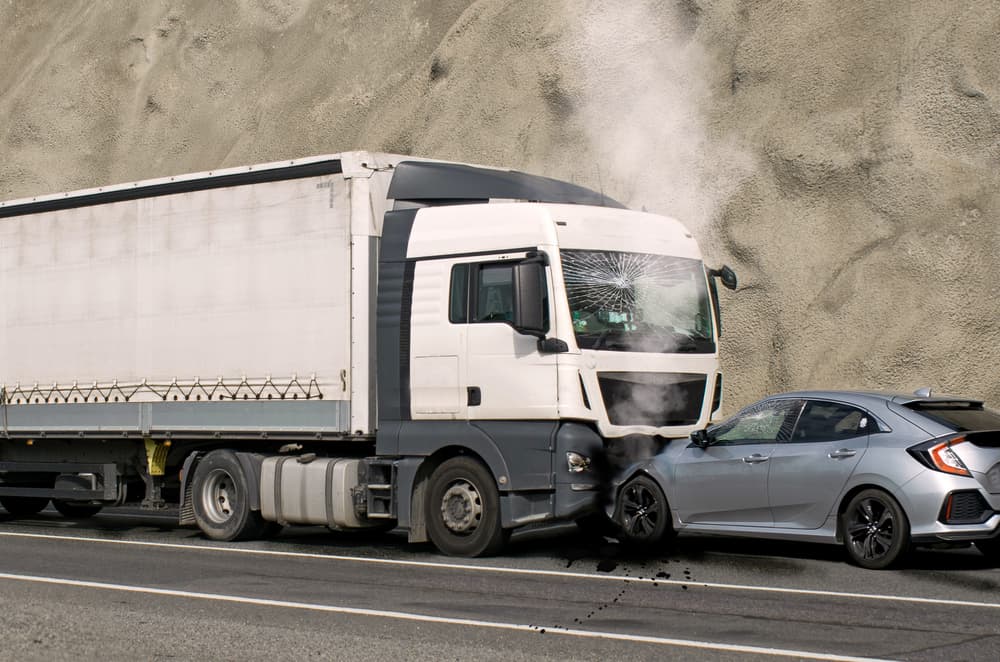 Trucking companies frequently outsource vehicle maintenance to third-party shops. If a maintenance contractor performs negligent brake repairs, fails to catch a worn tire during an inspection, or overlooks a steering defect, that contractor may bear liability for any crash that results. Maintenance records and inspection logs become powerful evidence in these cases.
Defective Truck Parts and Product Liability
Truck and parts manufacturers may face product liability claims when a defective component causes an accident. Under New York product liability law, manufacturers may face strict liability, meaning the injured party does not need to prove the manufacturer acted negligently. Common product defects in truck accident litigation include:
- Brake system failures due to design or manufacturing defects
- Tire blowouts caused by defective construction or inadequate tread design
- Defective trailer hitches, kingpins, or coupling devices
- Faulty underride guards that fail to prevent smaller vehicles from sliding beneath the trailer
Product liability claims add a separate defendant with separate insurance, expanding the pool of potential compensation available to the victim.
Can Cargo Loaders, Shippers, or Freight Brokers Be Liable for a Truck Accident?
The cargo inside the truck may itself be the cause of a Brooklyn truck accident. Improperly loaded or unsecured freight may shift during transit, causing the truck to roll over, jackknife, or lose control. The FMCSA’s cargo securement regulations set detailed standards for how cargo must be secured on commercial vehicles.
Who Loaded the Truck
If a separate company loaded the cargo and that company failed to follow proper securement procedures, the loading company may face liability for resulting injuries. Shippers who provide mislabeled hazardous materials or fail to disclose overweight cargo may also bear responsibility.
Freight Brokers
Freight brokers, the third-party logistics companies that match shippers with carriers, may face liability for negligently selecting an unqualified or unsafe carrier. If a broker fails to verify a carrier’s safety rating, inspection history, or insurance coverage before assigning a load, and that carrier causes a Brooklyn truck accident, the broker may share in the liability.
Can Government Entities Be Held Responsible for a Brooklyn Truck Accident?
Some Brooklyn truck accidents involve dangerous road conditions that a government entity failed to correct. A malfunctioning traffic signal at a busy intersection, a missing road sign, a deteriorating stretch of highway, or a large pothole on a truck route may all contribute to a crash.
Shorter Deadlines for Government Claims
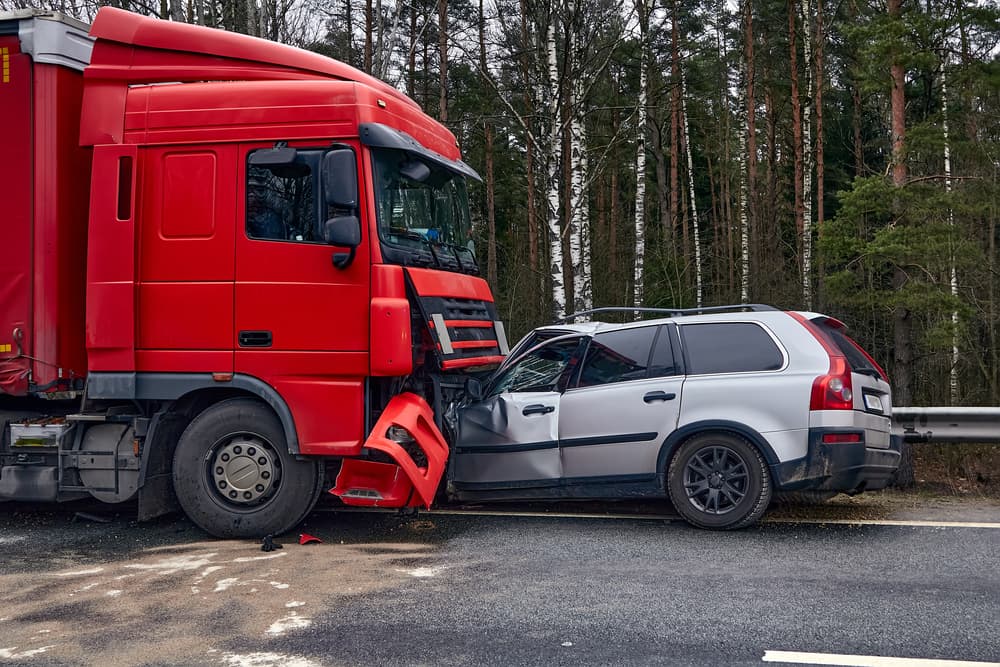 Claims against New York City or its agencies carry much tighter deadlines than standard personal injury lawsuits. Under New York General Municipal Law § 50-e, you must file a notice of claim within 90 days of the accident.
After that, you generally have one year and 90 days from the accident date to file your lawsuit. Missing these deadlines almost always bars the claim entirely, regardless of the severity of your injuries.
Other Potentially Liable Parties
Truck accident liability in Brooklyn may extend to parties that surprise many victims:
- Other negligent drivers whose actions contributed to the crash, even if they were not operating the truck
- Bars and restaurants that served alcohol to a visibly intoxicated truck driver before the accident, under New York’s dram shop liability laws
- Employers of the truck driver, if the driver was operating the truck in the course of employment for a company other than the motor carrier
Every additional liable party represents a potential additional source of insurance coverage. In catastrophic injury cases, identifying all available policies often determines whether the victim receives compensation that reflects the true scope of their losses.
How Finz & Finz, P.C. Investigates Truck Accident Liability in Brooklyn
Identifying every liable party in a Brooklyn truck accident takes more than a police report. Finz & Finz, P.C. has spent over 40 years investigating complex truck crash cases across New York, recovering over $1 billion in total verdicts and settlements for personal injury clients. The firm’s record includes a $24.5 million truck accident settlement for a child who sustained a spinal cord injury from the careless operation of a loaded tractor-trailer.
A Legal Team Built for Multi-Party Truck Litigation
The firm’s team includes four former judges, nurses, paralegals, and investigators who begin building your case from the moment you retain the firm. In Brooklyn truck accident cases, that work often means subpoenaing electronic logging device (ELD) records, maintenance logs, driver qualification files, and cargo loading documentation before the trucking company has a chance to destroy or alter them.
Brooklyn Roots and Courtroom Experience
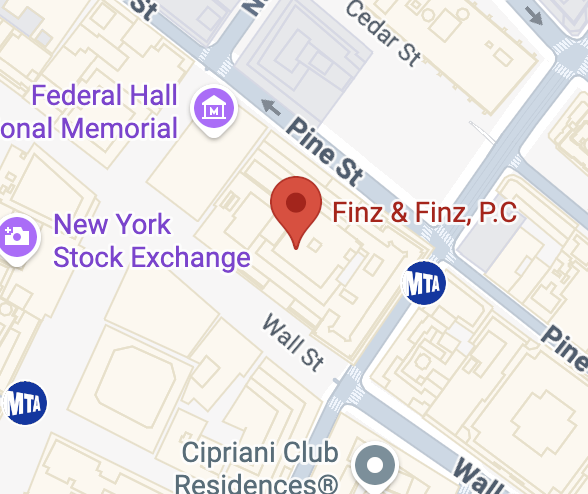
Finz & Finz operates a Brooklyn office at 31 Spencer Street, Suite 1202, Brooklyn, NY 11205. The firm’s attorneys appear regularly in Kings County Supreme Court. That local presence matters when your truck accident liability case involves parties doing business along the BQE, Atlantic Avenue, or through Brooklyn’s industrial corridors in Red Hook and Sunset Park.
The firm handles all Brooklyn truck accident cases on a contingency-fee basis. You pay nothing upfront, and you owe no attorney’s fees unless the firm recovers money for you.
FAQs About Truck Accident Liability in Brooklyn
Who may I sue after a truck accident in Brooklyn?
You may pursue claims against the truck driver, the trucking company, the truck owner, maintenance contractors, parts manufacturers, cargo loading companies, freight brokers, government entities, and any other party whose negligence contributed to the crash. The specific defendants depend on the facts and causes of your accident.
How does respondeat superior apply to truck accident cases in New York?
Respondeat superior holds an employer liable for the negligent acts of an employee committed within the scope of employment. If a truck driver causes a crash while performing job duties for a motor carrier, that carrier may face vicarious liability for the driver’s negligence alongside any direct negligence claims.
Does it matter whether the truck driver is an employee or independent contractor?
Yes. Respondeat superior generally applies only to employer-employee relationships. However, New York courts look beyond contract labels to examine the actual working relationship, and federal leasing regulations under 49 CFR Part 376 may impose liability on a carrier even when the driver is classified as an independent contractor.
What is the deadline for filing a truck accident claim against New York City?
You must file a notice of claim within 90 days of the accident under New York General Municipal Law § 50-e. After that, you generally have one year and 90 days from the accident date to file your lawsuit. These deadlines are much shorter than the standard three-year statute of limitations for personal injury claims.
How does product liability work in a truck accident case?
If a defective truck part, such as faulty brakes or a defective tire, caused or contributed to the accident, the manufacturer of that part may face strict liability. Under strict liability, the injured party does not need to prove the manufacturer acted negligently, only that the product had a defect that made it unreasonably dangerous and that the defect caused the injury.
Hold Every Responsible Party Accountable for Your Brooklyn Truck Accident

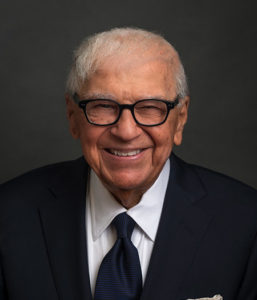
Stuart L. Finz, Brooklyn Truck Accident Lawyer
The trucking companies, maintenance contractors, and cargo loaders involved in your Brooklyn truck accident are not waiting around to accept blame. They are building their defenses right now, and their legal teams have done this before. The question is whether you have someone fighting just as hard on your side, someone who knows how to trace truck accident liability in Brooklyn back to every party who played a role in your injuries.
Finz & Finz, P.C. has pursued these cases for over four decades, recovered record-setting results, and built a reputation that makes insurance companies and trucking carriers take notice. Contact the firm today for a free consultation with a Brooklyn truck accident attorney ready to investigate your claim.
- About the Author
- Latest Posts

Finz & Finz, P.C. is a New York and Long Island personal injury law firm based out of Mineola, NY. It was founded in 1984 and is highly rated, with many honors and awards of excellence.