What Lyft’s Insurance Actually Covers Here
Lyft’s own coverage rules exclude trips that begin with a TLC-licensed driver inside New York City, which includes every Lyft pickup in Queens. Instead, the driver’s TLC-compliant commercial policy responds, carrying a floor of $100,000 per person and $300,000 per accident. That number sets the practical ceiling for a straightforward claim against the driver alone, regardless of how severe the injury turns out to be.
 When damages exceed that ceiling, we look at every other party who might share responsibility. A second driver involved in the crash carries an independent policy. The base company affiliated with the Lyft driver may have its own exposure if it kept dispatching a driver with a documented history of unsafe conduct.
And your own underinsured motorist coverage, if you carry it on a personal auto policy, can fill part of the gap that the TLC floor leaves open.
Multi-vehicle crashes on Queens Boulevard’s slip lanes and turning bays sometimes involve a third or fourth car, each carrying its own coverage, and untangling which driver’s negligence triggered which policy takes real work before any settlement number means anything.
We request the full police accident report, any available camera footage, and the trip data tied to the Lyft driver’s account before we ever quantify what a fair recovery looks like, because guessing at fault percentages without that material almost always favors the insurance company writing the check.
Vision Zero Cameras and Why They Matter to Your Claim
New York City has installed more speed and red light cameras than almost any city in the country, and Queens Boulevard, Northern Boulevard, and several other major arterials sit squarely inside that network. A camera near the intersection where your crash happened may have already captured the moments leading up to the collision, including the Lyft driver’s speed and whether the light was red.
That footage does not stay available indefinitely, and requesting it requires knowing exactly which agency holds it and how to file the request correctly. We move quickly to identify and preserve this kind of evidence before retention periods expire, because camera footage tends to settle disputes that would otherwise turn into a credibility contest between your account of the crash and the driver’s.
The sooner we are involved, the more of this evidence we can preserve. Call us at 718-946-2273 to start your free consultation today.
When Language Barriers Complicate a Queens Lyft Claim
 A language barrier at the scene can weaken your Queens Lyft claim if a witness statement is taken without proper interpretation. In neighborhoods like Jackson Heights, Flushing, and Elmhurst, witnesses often speak Spanish, Mandarin, Bengali, or Korean as a first language, and an imprecise statement can come out garbled or worded in a way an adjuster later uses against you.
We arrange qualified interpretations when we take witness statements, and we review NYPD accident reports closely for translation errors that sometimes creep in when an officer fills out a report quickly at the scene. If you needed an interpreter to communicate with first responders or with the Lyft driver after the crash, tell us early, since that detail can affect how we approach both the investigation and any later deposition.
This matters just as much for clients giving their own account of what happened. A description of pain, dizziness, or confusion translated imprecisely from one language to another can understate symptoms in a way that follows your medical record for the rest of the case. We make sure your initial statement, and every statement that follows, reflects what you actually experienced rather than what an inexact translation happened to capture.
Filing Deadlines That Apply to Your Queens Claim
Most Queens Lyft injury lawsuits get filed in Queens County Supreme Court in Jamaica. CPLR 214(5) gives you three years from the crash date to file that lawsuit, but your no-fault application for medical and lost-wage benefits is due within 30 days, a much tighter window that has nothing to do with whether your eventual lawsuit succeeds.
Missing the 30-day deadline can cost you those benefits even if your case is otherwise strong.
To recover for pain and suffering rather than only your medical expenses, you need to meet the serious injury threshold under New York Insurance Law Section 5102(d).
The statute lists nine qualifying categories, including bone fractures, permanent loss of use of a body function, and a non-permanent injury that keeps you from your normal activities for at least 90 of the 180 days following the crash. A strain that heals in a few weeks generally will not clear that bar.
What to Do After a Lyft Crash on a Queens Arterial
 Get medical attention right away, even if you feel mostly fine. Injuries from impacts on wide, high-speed roads like Queens Boulevard are not always obvious right away, and a prompt medical record creates the documentation your claim depends on.
Note the exact intersection or block where the crash occurred, since that detail determines which camera footage we request and which DOT records become relevant to the redesign history of that stretch of road.
Save your Lyft trip receipt and any in-app messages with your driver before that data becomes harder to retrieve. If a language barrier made it difficult to communicate with police or with the Lyft driver at the scene, write down what you remember as soon as you can, in whatever language is most natural for you, so we can have it properly translated and incorporated into your case file.
Avoid giving a recorded statement to any insurance representative before speaking with us, regardless of which company they represent. Adjusters are trained to extract details that minimize what they owe, and a statement given while you are still shaken can follow your case for years.
What Your Queens Lyft Claim Could Be Worth
Every case turns on its own facts: how serious and how permanent your injury is, how clearly the available evidence establishes fault, and how much total insurance coverage genuinely applies once every responsible party has been identified. A crash with strong camera footage showing a driver running a red light settles differently than a disputed claim with no independent evidence beyond the parties’ own accounts.
Lost income calls for the same careful documentation as your medical bills. Many Queens residents work in retail, food service, or healthcare jobs that require physical stamina, and an injury can take away from their work for months. We build the wage-loss portion of your claim around your actual pay history and your treating doctor’s restrictions, not a generic estimate that ignores what your specific job actually demands of you.
Future medical needs belong in that calculation, too. A torn ligament or a herniated disc often requires treatment that extends well past the date of an early settlement offer, and an insurer has no incentive to volunteer that your orthopedist expects further intervention down the road.
We work with your treating physicians to document what care you are likely to need so the final number reflects the full arc of your recovery, not just the bills already on file.
Finz & Finz: Built for Queens Cases
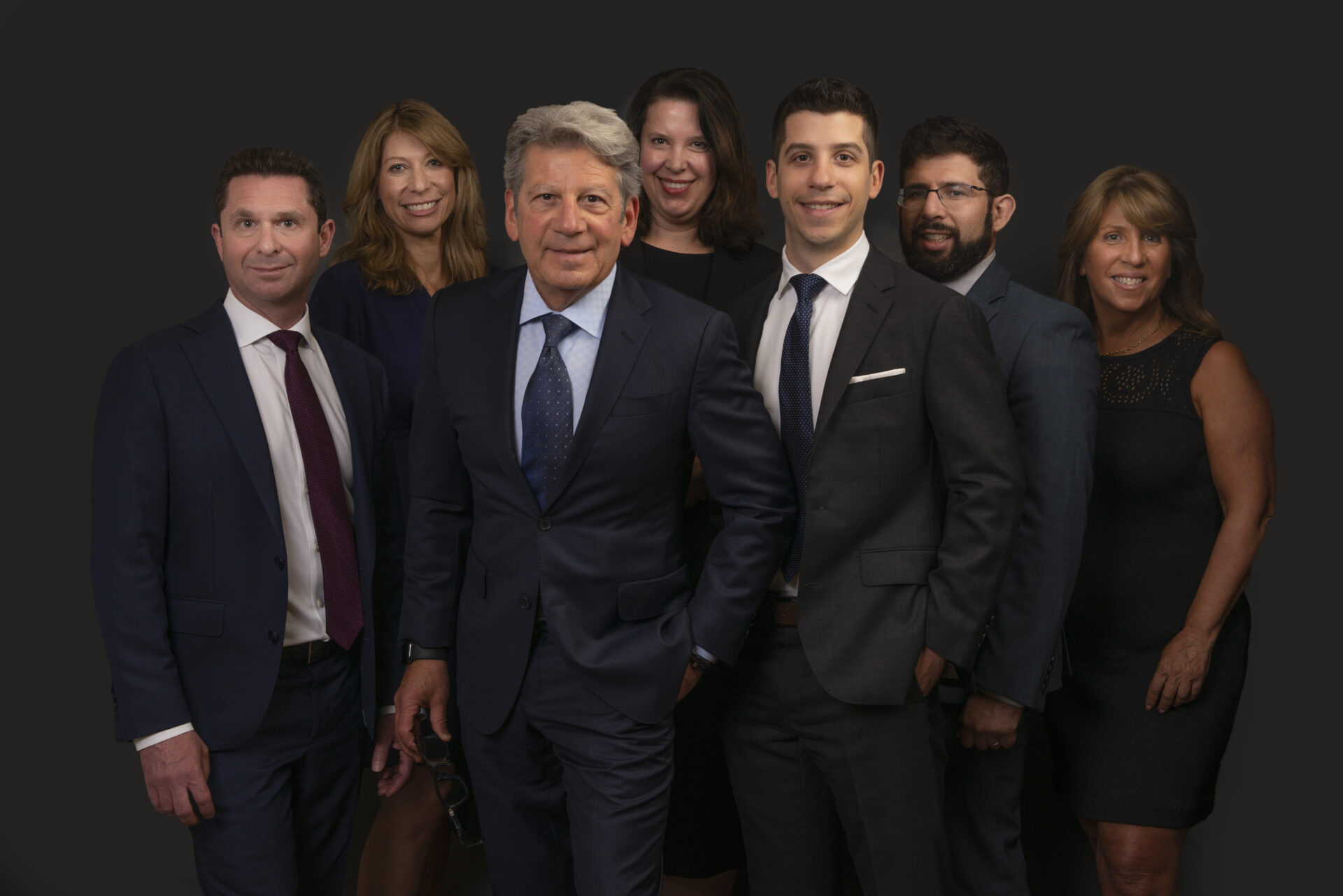
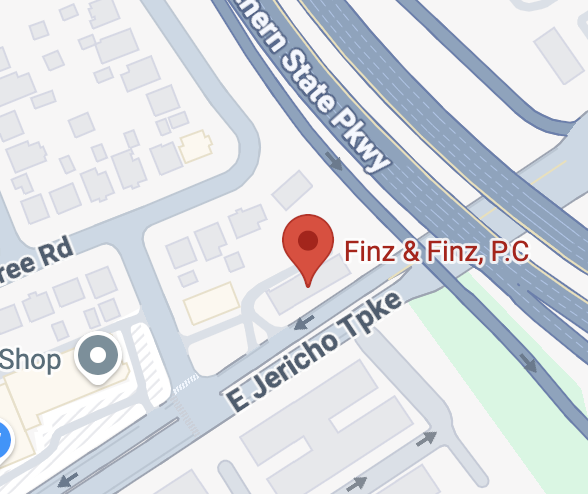
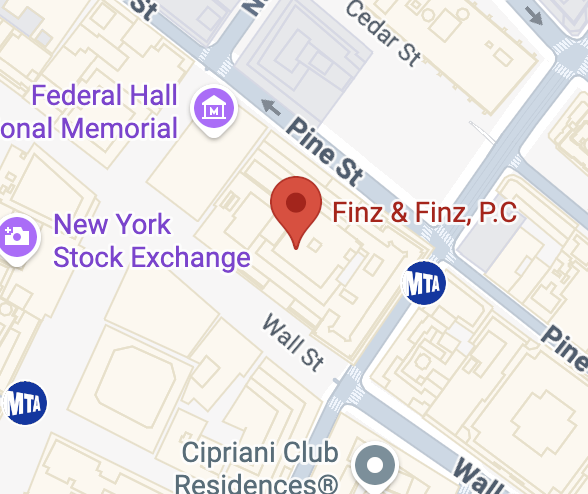
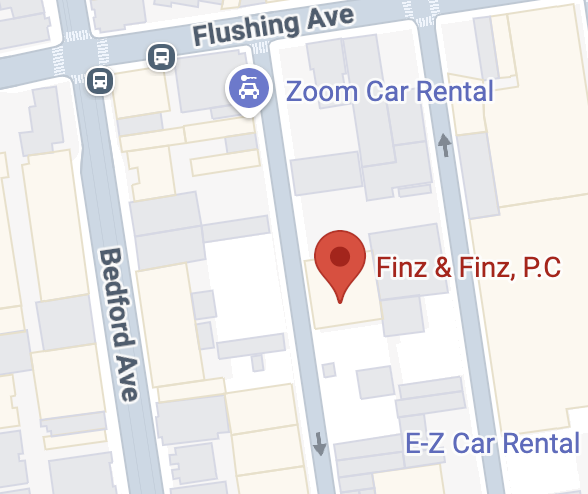
 Finz & Finz, P.C. has represented injured New Yorkers for decades, with offices at 40 Wall Street in Manhattan, Spencer Street in Brooklyn, and East Jericho Turnpike in Mineola, putting us within reach of Queens County Supreme Court and the neighborhoods our clients call home, from Jackson Heights to Forest Hills to Far Rockaway.
We know this borough’s roads, its traffic camera network, and the linguistic diversity that shapes how evidence gets gathered, and we put that knowledge to work from the first phone call.
We staff Queens cases with that local knowledge in mind, not as an afterthought once a case is already filed. Knowing which precinct handles the accident report for a given stretch of Northern Boulevard, or which DOT office maintains redesign records for a particular intersection, saves weeks compared to learning those details case by case.
There is no fee unless we recover money for you, and the first consultation is always free.
Talk to a Queens Lyft Accident Attorney Today
If a Lyft crash on Queens Boulevard or anywhere else in the borough left you hurt, find out what your case is actually worth before any insurance company tells you otherwise. Call our Brooklyn office at 718-946-2273 or our Manhattan office at 212-513-1000 for a free, no-obligation case review.



 More
More

 Queens Boulevard, Northern Boulevard, and Hillside Avenue generate so many Lyft crashes because they combine high speed with constant interruption. Too many lanes move in the same direction at once, broken up by frequent left turns, bus stops, and pedestrian crossings, and that mix forces split-second decisions that distracted rideshare drivers routinely get wrong.