When a House Party Leads to a Drunk Driving Crash
New York General Obligations Law Section 11-100 holds a person liable if they knowingly provide alcohol to someone under 21, and that minor later causes injury to someone else while intoxicated.
 This statute covers situations far removed from a bar or restaurant: a parent who allows underage drinking at a graduation party, an older sibling who buys alcohol for a younger one, or a homeowner who looks the other way while teenagers drink in a finished basement.
This kind of liability surfaces often in Queens, where graduation parties, weddings, and family celebrations frequently involve underage guests. A host does not need to be the one who handed over the car keys to share responsibility; knowingly supplying the alcohol is enough.
If they knowingly supplied alcohol to a minor who then drove and caused a crash, New York law allows the injured person to pursue a claim against that host directly, separate from any claim against the young driver.
Bars and Clubs Carry Their Own Liability Too
You can hold a bar or club liable when it serves a visibly intoxicated adult who then causes a crash, not only the driver. New York’s Dram Shop Act, codified at General Obligations Law Section 11-101, sets this standard for commercial establishments, a related but distinct rule from the social host law that governs private parties.
Astoria, Long Island City, and the bars along Rockaway Beach during the summer months all see significant late-night foot and vehicle traffic, and each venue carries the same legal duty to stop serving someone who is plainly past the point of safe driving.
We pull point-of-sale records, security footage, and staff schedules from these venues to establish exactly how much a driver was served and whether staff should have recognized the signs of intoxication before the last drink went out.
A receipt showing a dozen drinks charged to one card in two hours tells a very different story than a tab showing a slow, spaced-out evening, and that difference often determines whether a dram shop claim holds up.
If a bar overserved the driver who hurt you, call us at 718-946-2273 to find out whether a dram shop claim applies to your case.
Repeat Offenders and Disabled Interlocks Strengthen a Punitive Damages Claim
 New York’s Leandra’s Law requires anyone convicted of DWI to install an ignition interlock device, which prevents a vehicle from starting if the driver’s breath alcohol concentration exceeds a set limit.
Tampering with or bypassing that device is a separate crime under Vehicle and Traffic Law Section 1198, and when a driver who caused your crash had previously disabled or circumvented a court-ordered interlock, that fact becomes powerful evidence in a civil punitive damages claim.
Punitive damages require more than ordinary negligence. They require conduct that shows a conscious disregard for the safety of others.
A driver who already had one DWI conviction, was under a court order to use an interlock device, and found a way around it before getting behind the wheel again, presents about as clear a case for that standard as exists.
We pull DMV and court records early in any case involving a driver with a prior DWI history to determine whether this kind of evidence applies.
Interlock violations leave a paper trail of their own.
The device itself logs every breath test and every attempt to start the vehicle, and a monitoring agency, whether a county STOP-DWI program, probation, or the district attorney’s office, often has records showing prior violations well before the crash that injured you.
Obtaining those records can take time, and we start that process as soon as we learn a defendant has a prior DWI history, rather than waiting until the case is further along.
Your Civil Claim Doesn’t Wait for the Criminal Case
The driver’s criminal case proceeds through Queens Criminal Court, separate from your civil claim, which would be filed in Queens County Supreme Court in Jamaica.
You do not need to wait for the criminal matter to resolve before pursuing your own claim, and the two cases operate under different standards of proof.
A criminal conviction requires proof beyond a reasonable doubt, while your civil claim only requires a preponderance of the evidence, meaning it is more likely than not that the driver’s intoxication caused your injury.
A pending or even unresolved criminal case does not prevent your civil claim from moving forward, and a conviction, when one happens, can later support your case as evidence without forcing you to re-litigate every detail of how intoxicated the driver actually was.
You do not need to wait to protect your rights. Call Finz & Finz, P.C. at 718-946-2273 for a free review of your Queens drunk driving claim.
Where These Crashes Happen Most in Queens
 Astoria Boulevard and Steinway Street see a steady pattern of late-night crashes tied to the area’s bar and restaurant density, often involving a driver who only had to travel a short distance home and underestimated how impaired they actually were.
Rockaway Beach Boulevard sees a sharp seasonal spike every summer, when beach bars and boardwalk venues draw large crowds, and drivers navigate narrow residential streets afterward, frequently encountering pedestrians walking back from the same venues.
Atlantic Avenue through Jamaica presents a different pattern, with a mix of commercial strip bars and later-closing venues generating crashes that often involve a second vehicle, since the corridor carries continuous traffic even late at night.
We approach evidence differently depending on which pattern applies. A summer boardwalk crash often has more available witnesses given the foot traffic, while a strip-corridor crash on Atlantic Avenue may rely more heavily on the second driver’s dashcam or nearby business security footage.
When the Drunk Driver Has No Insurance or Flees the Scene
Drunk drivers run a higher risk of carrying minimal or no insurance, particularly if a prior conviction already led to a license suspension. They also flee more often than other at-fault drivers, since the consequences of staying at the scene while intoxicated are severe.
If you were the victim of a hit-and-run involving a driver you believe was impaired, your own supplementary uninsured/underinsured motorist coverage may still apply.
New York’s hit-and-run provisions allow a claim even when the driver was never identified, provided you report the incident promptly and meet specific procedural requirements.
We move quickly in these cases to canvass the area for security cameras and witnesses before that evidence disappears, since identifying a fleeing driver or proving the circumstances needed to pursue an unidentified-driver claim depends heavily on how fast that information gets collected.
Deadlines for Filing Your Queens Claim
 You have three years from the crash date to bring a personal injury suit under CPLR 214(5), whether your claim runs against the driver, a bar or club under the Dram Shop Act, a social host under Section 11-100, or some combination of all three.
If the crash resulted in a death, New York’s wrongful death statute, EPTL Section 5-4.1, sets a separate two-year deadline measured from the date of death rather than the date of the crash.
Most of these suits proceed in Queens County Supreme Court.
Recovering for pain and suffering also requires meeting the serious injury threshold under Insurance Law Section 5102(d), though the severity typical of drunk driving crashes, fractures, head trauma, and spinal injury often clears that bar without much dispute.
What to Do After a Queens Drunk Driving Crash
After a Queens drunk driving crash, your first priority should be your health. Even if your injuries seem minor, get medical attention immediately. Some injuries are not obvious right away, and prompt treatment creates the medical records your claim depends on.
Call the police and make sure an official accident report is filed. If the other driver appears intoxicated, tell the responding officers what you observed. Signs such as slurred speech, the smell of alcohol, bloodshot eyes, or unsteady movements should be documented in the report whenever possible.
If the driver had been drinking at a private residence rather than a bar or restaurant, note the address and, if you know, the identity of the host. Those details may become important if New York’s social host liability laws apply to the circumstances of the crash.
Gather contact information from anyone who witnessed the driver’s condition before the collision. Witnesses may have seen the driver drinking, leaving a party, stumbling toward a vehicle, or driving erratically before the crash. Their statements can provide valuable evidence if liability is later disputed.
Avoid discussing the accident with the other driver’s insurance company before speaking with an attorney. Insurance adjusters may try to obtain statements that weaken your claim or reduce the compensation you are owed.
If the driver fled the scene, report it to the police immediately. Early reporting gives investigators the best chance to locate the driver, preserve surveillance footage, identify witnesses, and secure other evidence before it disappears.
What Your Queens Drunk Driving Claim Could Be Worth
 Case value depends on the severity of your injuries, the strength of the evidence establishing intoxication, whether a viable claim exists against a bar or a private host in addition to the driver, and how much insurance coverage genuinely applies once every policy and party has been identified.
A case supported by a documented prior DWI, a disabled interlock device, or a clear dram shop trail tends to carry more leverage, since it opens both a punitive damages argument and a second source of recovery beyond the driver’s own policy.
We calculate lost income, medical costs already incurred, and future treatment your doctors anticipate before discussing settlement with any insurer, because an early offer reflects the day you called, not the full cost your recovery will reach.
Finz & Finz: Queens Drunk Driving Experience
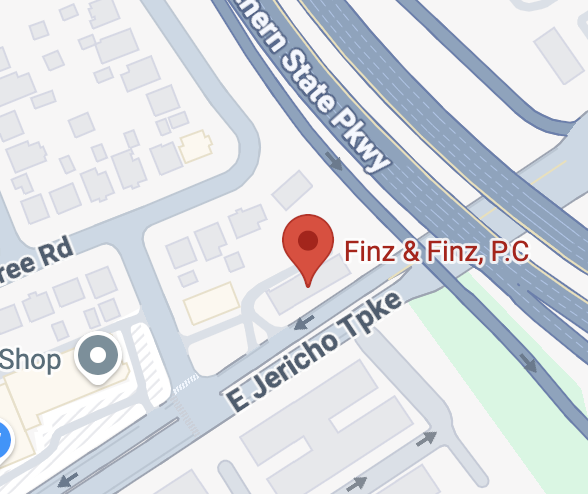
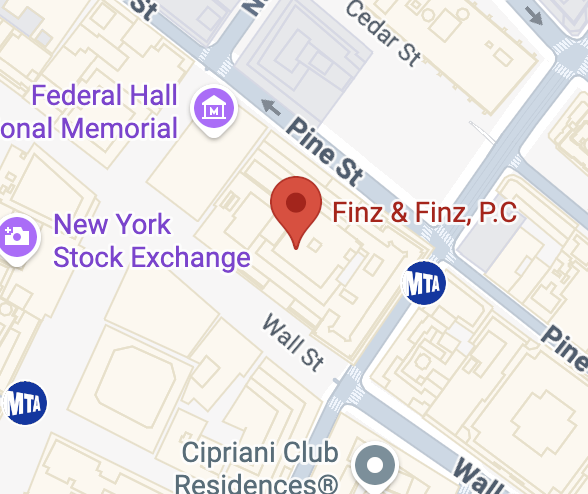
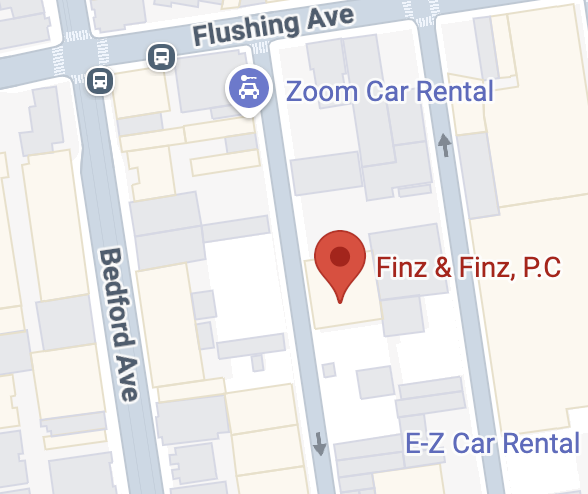
For decades, Finz & Finz, P.C. has taken on injured New Yorkers’ cases from three offices: 40 Wall Street in Manhattan, Spencer Street in Brooklyn, and East Jericho Turnpike in Mineola.
Each puts our team within reach of Queens County Supreme Court and the neighborhoods where these crashes happen, from Astoria to Rockaway Beach to Jamaica.
We pursue claims against drivers, bars, and private hosts alike, and we know how to build the kind of record that turns a routine negligence claim into one supported by punitive damages.
There is no fee unless we recover money for you, and your first consultation is always free. We can begin reviewing your case the same day you call.




 More
More

 Injured by a drunk driver in Queens? You may be able to recover compensation from more than just the driver. Depending on the circumstances, a bar, restaurant, private host, or another responsible party may also be legally liable.