

 More
More
New York City Hospital Nursing Errors Lawyers

New York City Hospital Nursing Errors Lawyers
Nurses provide the majority of direct patient care in hospitals. They administer medications, monitor vital signs, respond to changes in condition, and serve as the communication link between patients and physicians. When that care breaks down, whether through a medication mistake, a missed warning sign, or a failure to follow protocols, the patient bears the consequences.
The New York City hospital nursing errors lawyers at Finz & Finz, P.C. help patients and families evaluate whether a nursing failure caused harm and whether the hospital bears legal responsibility. Nursing errors are often system-level problems, not just individual mistakes. Understaffing, poor supervision, communication breakdowns between shifts, and inadequate training create environments where preventable errors occur.
Families often recognize something was missed only after a patient’s condition worsens without explanation. New York law holds hospitals accountable for maintaining safe systems of care, and when those systems fail, the institution may be liable.
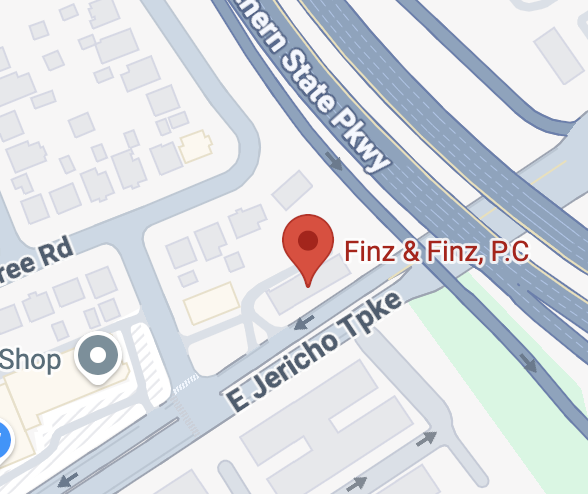
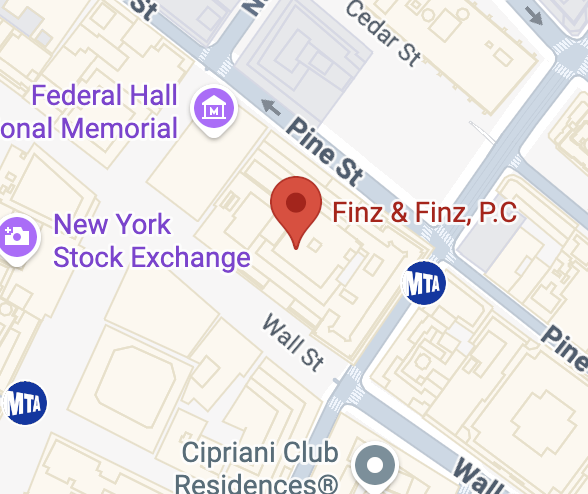
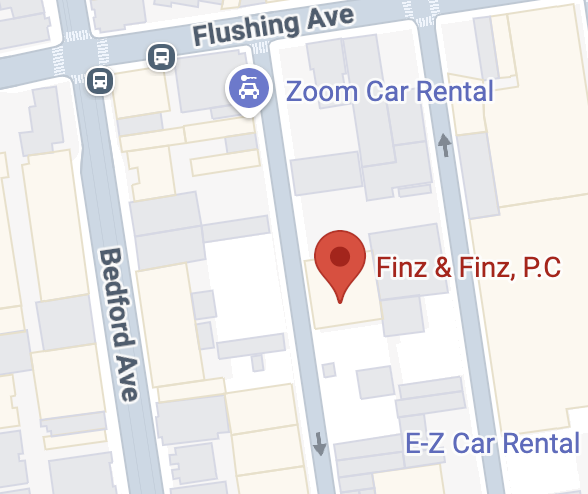
Our firm maintains offices across New York City, including Manhattan at 40 Wall Street, Brooklyn at 31 Spencer Street, and Mineola at 410 East Jericho Turnpike. We serve patients and families in all five boroughs.
How Nursing Errors Are Evaluated Under New York Law
Medical malpractice claims often focus on physician decision-making: a missed diagnosis, a surgical mistake, or a treatment error. Nursing malpractice focuses on a different layer of care entirely. Nurses have their own independent duties, separate from the physician’s orders, and they are held to their own professional standards.
 A nurse who administers a medication at the wrong dose is not simply following a bad order. The nurse has an independent obligation to verify the medication, the dosage, and the patient before administering anything. That obligation exists regardless of what the physician wrote.
The Nurse’s Independent Standard of Care
New York evaluates nursing care against what a reasonably competent nurse in the same role would have done under similar circumstances. This standard applies to registered nurses, licensed practical nurses, and nurse practitioners working in hospital settings.
The distinction matters because a nursing error may give rise to a malpractice claim even when the physician’s care was appropriate. The two providers are evaluated independently, and each may be held to account for their own failures.
Why Choose Finz & Finz, P.C. for a Hospital Nursing Errors Case
Nursing error cases often depend on details buried in charting and shift documentation. Identifying those failures requires both clinical and legal analysis, and not every firm has the internal resources to do that work. Finz & Finz, P.C. has investigated hospital care systems across New York for more than four decades.
Our founder, former New York State Supreme Court Justice Leonard L. Finz, established this firm in 1984. Under the leadership of CEO and senior trial attorney Stuart L. Finz, our team has recovered more than $1 billion in verdicts and settlements. The firm includes four former judges, trial attorneys with deep experience in medical litigation, and nurses on staff who assist with record review and case evaluation.
Clinical Fluency in Nursing Documentation
Hospital nursing records are dense, often running hundreds of pages for a single admission. Our registered nurses review charting, medication administration records, vital sign logs, and nursing assessments to identify where care deviated from protocol. That clinical fluency distinguishes our approach from firms that rely solely on outside review.
New York City hospital nursing errors lawyers at our firm work directly with families from the first case evaluation through resolution. Get a clear understanding of whether the nursing care you received met accepted hospital standards.

Common Types of Nursing Errors in New York City Hospitals
Nursing errors span a wide range of failures. Some are immediately apparent, while others develop over hours as a patient’s condition worsens without intervention. The common thread is that each traces back to a failure to meet the accepted standard of nursing care.
Medication Administration Errors
Medication errors are among the most frequently reported nursing failures in hospital settings. These errors include administering the wrong medication, giving the correct medication at the wrong dose, delivering medication to the wrong patient, and failing to check for known allergies or drug interactions.
A nurse medication error lawsuit in NYC often involves a review of the medication administration record (MAR), which documents every dose given, the time, and the administering nurse. Discrepancies between physician orders and the MAR may become central evidence in these claims.
Failure to Monitor and Respond to Changes
 Hospital patients depend on nursing staff to check vital signs at regular intervals and recognize when those readings signal a problem. Failure to monitor a patient in a hospital in NYC is a common basis for malpractice claims, particularly in post-surgical, ICU, and labor and delivery settings.
When a patient’s blood pressure drops, oxygen levels decline, or heart rate becomes irregular, the nursing standard of care requires prompt assessment and communication with the attending physician. Delays in recognizing or reporting these changes may allow a treatable condition to become a medical emergency.
Patient Falls and Safety Failures
Patients assessed as fall risks require specific precautions, including bed alarms, rails, non-slip footwear, and assisted ambulation. When nursing staff fail to implement these measures and a patient falls, the resulting injury may form the basis of a negligence claim. Fall-related injuries, including hip fractures and head trauma, are particularly serious for elderly patients.
Communication Failures During Shift Changes
Shift handoffs are critical moments in nursing care. When outgoing nurses fail to communicate changes in a patient’s condition, pending test results, or physician orders, the incoming team operates without essential information. These communication gaps frequently contribute to errors that occur in the hours following a shift change.
When the Hospital Is Responsible for Nursing Errors
Individual nurses make mistakes. But many nursing errors trace back to decisions the hospital made about staffing, supervision, training, and protocol enforcement. New York law holds hospitals accountable not only for the actions of their employed nurses but for the systems those nurses operate within.
Vicarious Liability for Employed Nurses
 When a hospital employs a nurse directly, the hospital shares legal responsibility for that nurse’s conduct under vicarious liability. If an employed nurse administers the wrong medication and causes harm, the hospital may be liable alongside the nurse. This principle applies to registered nurses, LPNs, and other nursing staff on the facility’s payroll.
Hospital Staffing Negligence in New York
Understaffing is a recurring factor in nursing error cases. When hospitals assign too many patients to a single nurse, the quality of monitoring, medication administration, and communication inevitably declines. Hospital staffing negligence in New York may form an independent basis for liability, separate from any individual nurse’s error.
Consider this example: A post-surgical patient at a Manhattan hospital requires hourly vital sign checks. The assigned nurse is simultaneously responsible for seven other patients due to a staffing shortage. A critical change in the patient’s condition goes undetected for three hours. The legal question is whether the hospital’s staffing decision created conditions that made the error predictable. New York City hospital nursing errors lawyers evaluate these staffing patterns as part of every case review.
What Evidence Do New York City Hospital Nursing Errors Lawyers Use to Build These Claims?
Building a nursing malpractice case requires documentation that reveals exactly what care was provided, when it was provided, and whether it met the accepted standard. Hospital records are detailed, and the most relevant pieces are often buried within the charting.
 The records that carry the most significance in these cases include:
- Nursing assessment and charting notes, documenting the nurse’s observations, the patient’s reported symptoms, and the care provided during each shift
- Medication administration records (MARs), showing every medication given, the dose, the time, and the administering nurse
- Vital sign logs, documenting the frequency and results of monitoring throughout the hospital stay
- Physician order records, establishing what the treating doctor directed and whether nursing staff carried out those orders correctly
- Incident or occurrence reports, which hospitals generate internally when an adverse event is identified
Obtaining the complete nursing record early matters. Some electronic charting systems archive or overwrite data on set schedules. The longer the delay in requesting records, the greater the risk that details will become harder to access.
New York City’s Hospital System and Nursing Error Risk
New York City’s hospitals serve more than eight million residents across five boroughs. NYU Langone, Mount Sinai, NewYork-Presbyterian, Bellevue Hospital, and facilities within the NYC Health + Hospitals system each operate large nursing staffs managing high patient volumes around the clock.
 The New York State Department of Health oversees hospital licensing and patient safety compliance. Nursing staffing levels, training requirements, and incident reporting obligations all fall under state regulatory oversight. Hospitals that fail to maintain adequate nursing resources face both regulatory consequences and potential civil liability.
Teaching hospitals across Manhattan, Brooklyn, the Bronx, and Queens involve nursing students and new graduates in direct patient care. The level of supervision these less experienced nurses receive varies by institution and unit. When supervision falls short, the hospital’s training and oversight practices may become part of the liability analysis.
Filing Deadlines for Nursing Malpractice Claims in New York
Under CPLR § 214-a, the statute of limitations for medical malpractice in New York is two years and six months from the date of the alleged error. Claims against public hospitals, including Bellevue and other NYC Health + Hospitals facilities, require a Notice of Claim filed within 90 days.
CPLR § 3012-a requires a certificate of merit before filing. The attorney must consult with a licensed medical professional to confirm that the claim has a reasonable basis. In nursing error cases, that consultation often involves a nursing professional who evaluates the charting, staffing, and care against accepted standards.
How New York City Hospital Nursing Errors Lawyers at Finz & Finz Investigate These Cases
Our approach to nursing malpractice cases begins with the hospital record. We review the complete nursing chart, including every assessment, note, vital sign entry, and medication log from the admission.
 From there, we identify the specific points where care departed from the standard. That process involves several layers:
- Nursing record review by clinical professionals on our team who identify gaps in charting, missed assessments, and deviations from physician orders
- Staffing analysis, examining whether the hospital maintained adequate nurse-to-patient ratios during the relevant shifts
- Protocol comparison, measuring the care provided against the hospital’s own written nursing policies and procedures
- Consultation with nursing professionals in the relevant practice area who evaluate the standard of care and provide testimony
- Timeline reconstruction mapping every critical event, decision, and communication gap from admission through the adverse outcome
This process reveals whether the error was an isolated individual failure or the product of a system that made the failure predictable. New York City hospital nursing errors lawyers at our firm assess both types of failure in every case we review.
FAQs for New York City Hospital Nursing Errors Claims
What is the difference between a nursing error and a medical complication?
A complication is an adverse event that occurs despite proper care. A nursing error involves a failure to meet the accepted standard, such as missing a medication dose, failing to monitor vital signs, or not communicating a change in condition to the physician. The distinction requires review of the nursing record and the protocols that applied.
What if the nurse was following a doctor’s order?
Nurses have an independent duty to verify that physician orders are safe and appropriate. If a doctor orders a medication to which the patient has a documented allergy, the nurse has an obligation to catch that conflict. Following an order does not automatically shield the nurse or the hospital if the order was clearly unsafe and the nurse failed to question it.
What if the hospital says staffing levels were within guidelines?
Minimum staffing ratios are one measure, but they do not automatically mean care was adequate. The legal analysis examines whether actual staffing on the relevant shift, combined with patient acuity levels, provided sufficient coverage. A hospital meeting minimum ratios may still be liable if the patient load overwhelmed the available nursing staff.
What if the nursing error was not documented in the chart?
Missing documentation may actually support a claim rather than weaken it. When a required assessment, vital sign check, or medication administration is not charted, one reasonable inference is that it was not performed. Gaps in the nursing record often become important evidence in demonstrating that the standard of care was not met.
Are agency or temporary nurses held to the same standard?
Yes. Temporary and agency nurses working in New York City hospitals are held to the same professional standard of care as permanent staff. The hospital may also bear responsibility for how it integrates, orients, and supervises temporary nursing staff assigned to its units.
Have Your Hospital Records Reviewed to Identify Where Care Broke Down
 When a nursing error causes harm during a hospital stay, the question extends beyond one person’s mistake to the systems the hospital put in place. New York City hospital nursing errors lawyers at Finz & Finz, P.C. investigate both the individual care provided and the institutional decisions behind it, including staffing, communication protocols, and supervision practices.
Our contingency fee structure means you pay nothing unless we recover compensation on your behalf. If your experience during a New York City hospital stay left you questioning the nursing care that was provided, a detailed review of the hospital record is where the answers begin.
Contact Finz & Finz, P.C. at 855-TOP-FIRM (855-867-3476) to start that process.