When the Bar Shares the Blame: Dram Shop Liability in Brooklyn
New York General Obligations Law Section 11-101, the state’s Dram Shop Act, allows an injured person to sue the bar, restaurant, or club that sold alcohol to a visibly intoxicated patron who went on to cause harm.
 The standard is not whether the bartender intended to overserve anyone. It is whether a reasonable employee should have recognized the signs, slurred speech, unsteady movement, repeated stumbling, glassy eyes, and stopped service anyway.
Brooklyn’s nightlife corridors, from Williamsburg to Bushwick to the Greenpoint waterfront, generate a steady volume of these cases, and every venue carries the same legal duty to cut off a visibly intoxicated customer.
To prove a bar breached that duty, we pull receipts, POS timestamps showing how many drinks were sold and when, and staff schedules. Those records establish exactly who served the driver and what they should have noticed before the last round went out.
New York courts have also recognized liability where multiple establishments contributed to a single patron’s intoxication over the course of a night, which matters in a borough where bar-hopping along a single strip is common.
If a driver visited three venues before getting behind the wheel, each one that kept serving them after the signs of intoxication became obvious can potentially share responsibility, even though no single bar served every drink that night.
Punitive Damages: Why These Cases Differ From an Ordinary Crash
Most car accident claims compensate you for what you actually lost: medical bills, lost income, pain and suffering. Drunk driving cases can go further. New York courts allow punitive damages when a defendant’s conduct rises to the level of recklessness or a conscious disregard for the safety of others, and getting behind the wheel after a night of heavy drinking fits that standard far more often than ordinary carelessness does.
Punitive damages exist to punish the driver’s choice, not just to compensate you for the harm it caused.
We build the factual record that supports a punitive damages claim from the start, including the driver’s blood alcohol level at the time of arrest, any prior DWI history, and whether they fled the scene or refused a breathalyzer, since each of these facts strengthens the argument that this was not a momentary lapse but a choice made with disregard for everyone else on the road.
Courts evaluate these requests carefully, and not every drunk driving case automatically supports a punitive award.
A driver with a blood alcohol level just over the legal limit who otherwise drove carefully before the crash presents a different picture than a driver who blew well over twice the limit, swerved across multiple lanes, or had a prior conviction for the same conduct.
We assess the specific facts of your case honestly before deciding how hard to push for punitive damages, because an unrealistic demand can sometimes slow down a fair settlement on the compensatory side of the claim.
A drunk driver’s recklessness can support more than ordinary damages. Call us at 718-946-2273 to discuss whether your case qualifies for a punitive claim.
Your Civil Case and the Criminal Case Run on Separate Tracks
 The district attorney’s office decides whether to prosecute the driver criminally, and that decision has nothing to do with your right to file a civil claim for your injuries.
You do not need to wait for the criminal case to resolve before pursuing compensation, and a criminal conviction, if one happens, can later be used as evidence in your civil case without having to re-prove every element of the driver’s intoxication from scratch.
A criminal acquittal does not end your civil case either, since the standards of proof are different. A prosecutor must prove guilt beyond a reasonable doubt. A civil claim only requires a preponderance of the evidence, meaning it is more likely than not that the driver’s intoxication caused your injury. We have pursued successful civil claims even where the criminal case against the driver did not result in a conviction.
Where Brooklyn’s Drunk Driving Crashes Happen Most
Late-night crashes cluster around the borough’s nightlife corridors. Williamsburg and Bushwick, with their density of bars and late-closing venues, see a predictable spike in single-vehicle and pedestrian-involved crashes between midnight and four in the morning, often on streets too narrow to allow much room for a driver who has lost full control of reaction time and judgment.
The BQE and the Belt Parkway see a different pattern: high-speed crashes where an impaired driver drifts out of a lane or fails to slow for traffic ahead, frequently with more severe injuries given the speeds involved.
Park Slope and Carroll Gardens, both home to a dense restaurant and bar scene, generate their own share of late-evening pedestrian strikes, often involving a driver leaving a dinner that included several rounds of drinks before getting behind the wheel for what felt like a short trip home.
We treat each of these patterns differently when building a case, since the evidence available, traffic camera footage on an expressway versus witness accounts on a residential block, varies considerably.
What If the Drunk Driver Was Uninsured or Underinsured?
 Drunk drivers frequently carry minimal insurance, and some carry none at all, particularly if a prior DWI already led to a license suspension and lapsed coverage. When that happens, your own supplementary uninsured/underinsured motorist coverage, if you carry it on your personal auto policy, becomes a critical source of recovery.
New York requires insurers to offer this coverage, though many drivers carry only the state minimum without realizing how much more protection a modest premium increase would buy.
We review your policy early in every case involving a drunk driver, because the timeline for notifying your own insurer of a SUM claim can be shorter than people expect, and missing that window can cost you access to coverage you have been paying for all along.
Deadlines That Apply to Your Brooklyn Case
New York gives you three years from the date of the crash to file a personal injury lawsuit under CPLR 214(5), and that deadline applies whether your claim is against the driver, the bar under the Dram Shop Act, or both.
If the crash resulted in a death, the timeline changes: wrongful death claims under EPTL Section 5-4.1 must be filed within two years of the date of death, not the date of the crash, which matters in cases where a victim survived for a period of time before passing.
Most Brooklyn drunk driving lawsuits get filed in Kings County Supreme Court. Recovering for pain and suffering also requires meeting the serious injury threshold under New York Insurance Law Section 5102(d), though many drunk driving crashes involve injuries severe enough, fractures, head trauma, and permanent impairment, that this threshold is rarely the central issue, the way it sometimes is in a minor fender-bender claim.
These deadlines move faster than they look. Call Finz & Finz, P.C. at 718-946-2273 to protect your Brooklyn claim today.
What to Do After a Brooklyn Drunk Driving Crash
 Get medical attention immediately, and make sure the police report documents any signs of the other driver’s intoxication, since officer observations at the scene often carry significant weight later. If you can safely do so, note the name of any bar, restaurant, or venue the driver mentioned coming from, since that detail can open a dram shop investigation before the trail of receipts and security footage goes cold.
Get contact information from witnesses, especially anyone who saw the driver before the crash, at a bar, in a parking lot, or stumbling toward their car. Avoid discussing the details of what happened with any insurance representative, including your own, before speaking with us, since early statements can complicate both your injury claim and any potential dram shop case against the establishment involved.
What Your Brooklyn Drunk Driving Claim Could Be Worth
The value of a drunk driving claim depends on the severity of your injuries, the strength of the evidence establishing the driver’s intoxication, whether a dram shop claim against a bar or venue is viable, and how much insurance coverage is genuinely available once every policy has been identified.
Cases involving clear evidence of overservice, timestamped receipts, witness accounts of visible intoxication, security footage, tend to carry additional leverage precisely because a second defendant with its own insurance coverage enters the picture.
Punitive damages, when the facts support them, can meaningfully increase what a case is worth beyond compensatory damages alone, though courts apply this remedy carefully, and it requires a clear factual record rather than the conduct simply being illegal. We build that record from the earliest stage of your case rather than trying to assemble it after a settlement conversation has already started.
Finz & Finz: Decades of Brooklyn Drunk Driving Cases
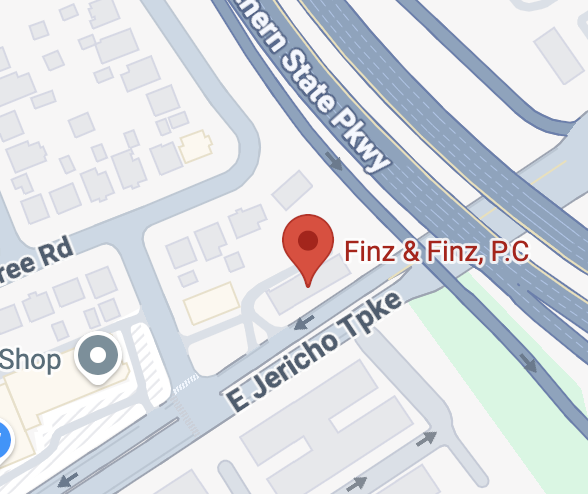
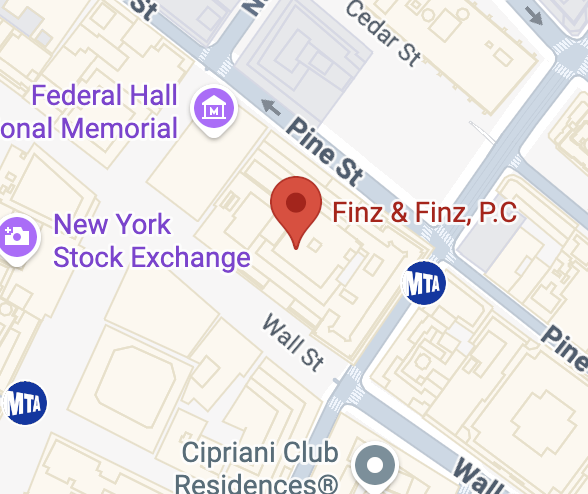
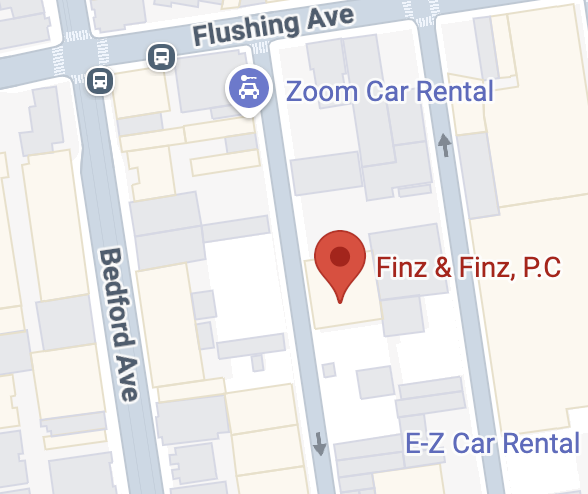
 Finz & Finz, P.C. has represented injured New Yorkers for decades, with offices at 40 Wall Street in Manhattan, Spencer Street in Brooklyn, and East Jericho Turnpike in Mineola, putting our Brooklyn team close to Kings County Supreme Court and the neighborhoods where these crashes happen most often.
We have pursued claims against drivers, bars, and venues alike, and we know how to build the factual record that makes a dram shop or punitive damages claim hold up against a defense team determined to argue the crash was simply an accident.
Investigating a dram shop claim takes speed, since security footage and POS records do not stay available indefinitely, and a venue under no obligation to preserve them may not. We move on that evidence immediately once we take on a case, rather than waiting until a lawsuit has already been filed to start asking questions.
There is no fee unless we recover money for you, and your initial consultation is always free.




 More
More