

 More

Brooklyn Hospital Malpractice Attorneys

You went to a Brooklyn hospital for help, and you left worse off than when you arrived. A Brooklyn hospital malpractice lawyer at Finz & Finz P.C. can review what happened and tell you whether the care fell below what New York law requires.
Call 24/7 for a Free Case Review at 718-946-2273.
Hospital cases move on tighter timelines than most people expect, and the clock often depends on who runs the hospital.
How Finz & Finz P.C. Handles Brooklyn Hospital Cases
Medical malpractice is a core practice at Finz & Finz P.C., and many firms in the area won’t take these cases at all.
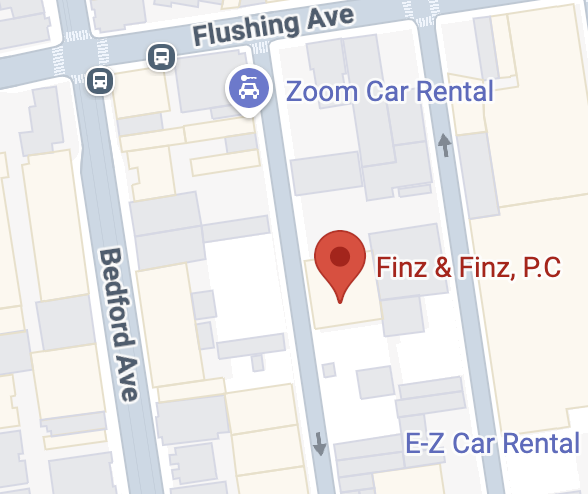
Our team reviews the full chart, works with physicians in the relevant specialty, and builds a timeline that shows where care broke down. We represent Brooklyn patients from our office at 31 Spencer St., Suite 1202.
Results Against Hospitals
The firm obtained a $40.3 million medical malpractice verdict against two Long Island hospitals in Nassau County.
Across all of its work, the firm has won over $1 billion for its deserving clients.
Every case turns on its own facts, and past results don’t guarantee a similar outcome.

Why the Hospital’s Owner Changes Your Deadline
Brooklyn has private nonprofit hospitals, city-run public hospitals, a state-run hospital, and a federal VA campus.
The public hospital rules catch many families off guard. NYC Health + Hospitals runs Kings County, Woodhull, and South Brooklyn Health. A claim against that system must start with a notice of claim served within 90 days.
Missing it can end the case before it begins, even though a private hospital case would still have years left. Each category follows different filing rules, and the shortest deadline can be as little as 90 days. Here is how the main categories compare:
| Hospital type | Brooklyn examples | Where the case is filed | First deadline |
|---|---|---|---|
| Private hospital | Maimonides Medical Center, NYU Langone Hospital-Brooklyn, NewYork-Presbyterian Brooklyn Methodist | New York State Supreme Court, Kings County | Lawsuit within 2 years and 6 months |
| City public hospital | NYC Health + Hospitals/Kings County, Woodhull, and South Brooklyn Health | New York State Supreme Court, Kings County | Notice of claim within 90 days; lawsuit within 1 year and 90 days |
| State hospital | SUNY Downstate’s University Hospital of Brooklyn | New York State Court of Claims | Claim, or notice of intention to file one, within 90 days |
| Federal VA hospital | VA NY Harbor Healthcare System, Brooklyn campus | Federal administrative claim first, then federal court | Written claim to the agency within 2 years |
What Happens After a Notice of Claim
A notice of claim is a sworn written statement describing when, where, and how the injury happened. It goes to the public entity, not the individual doctor. After it is served, NYC Health + Hospitals can demand a pre-suit examination under oath. The lawsuit generally can’t be filed until that step is handled.
Late Notice Is Possible but Not Guaranteed
Courts can sometimes allow a late notice of claim under General Municipal Law 50-e. Judges look closely at whether the hospital learned the essential facts in time and whether the delay hurt its ability to defend itself. Counting on permission after the fact is risky, so treat the 90-day window as firm.
Claims Against SUNY Downstate
Claims against SUNY Downstate belong in the Court of Claims rather than the Brooklyn courthouse. There, the claim or a notice of intention to file it must be served within 90 days. With a timely notice of intention, the claim itself can generally be filed within two years.
Hospital Negligence and Hospital Malpractice Are the Same Question
Patients search for both terms, but New York law treats them as one kind of claim. The question in either case is whether hospital staff or the hospital itself departed from accepted medical practice, and whether that departure caused harm.
Hospital malpractice claims in Brooklyn often grow out of problems like these:
- Medication errors, including wrong drugs, wrong doses, and dangerous interactions no one caught
- Nursing failures, such as missed changes in vital signs or delayed calls to a physician
- Surgical and anesthesia mistakes during or after a procedure
- Hospital-acquired infections that were not prevented, recognized, or treated in time
- Lab and imaging results that were reported but never acted on
- Unsafe discharges, where a patient was sent home before it was safe
- Delivery room errors that injure a mother or newborn
Some hospital errors happen in a single moment in the emergency department. Others build over days on an inpatient floor as warning signs pile up. The medical record usually shows which kind of case you have.
Where Handoffs Break Down
A single hospital stay can involve dozens of people. Patients move from the emergency department to imaging, surgery, recovery, and a medical floor, and the care team changes with every shift. Each transfer is a chance for an order, a lab value, or a nurse’s concern to get lost.
Many hospital malpractice cases turn on those gaps. The chart may show that a nurse charted a fever at night, but no one told the physician until morning. Or it may show that a radiology report flagged a problem the admitting team never read. Reconstructing the timeline hour by hour is often how those failures come to light.
Teaching hospitals add another layer. Residents and fellows provide much of the direct care in large Brooklyn hospitals, and supervision by attending physicians varies. When a resident’s decision causes harm, the question often becomes whether the hospital’s supervision met the standard of care.
When the Hospital Itself Is Responsible
A hospital is responsible for the negligence of the people it employs, including nurses, residents, technicians, and staff physicians. This rule, called vicarious liability, makes the hospital a defendant alongside the individual provider.
Institutional Negligence
Some claims focus on the hospital’s own decisions. A hospital must hire and supervise qualified staff, keep safe policies in place, and make sure information moves between departments. Chronic understaffing, weak supervision of residents, or a system that lets critical results go unread can all support a claim against the institution.
Doctors Who Aren’t Hospital Employees
Many surgeons, anesthesiologists, and radiologists work inside hospitals as independent contractors. That can complicate the question of who is responsible. Identifying the right defendants early matters, because each one may have a different deadline or notice requirement.
Exceptions That Can Change the Deadline
Under CPLR 214-a, the general deadline for a malpractice lawsuit against a private hospital is two years and six months. Several rules can move that date:
- Continuous treatment: the clock can start at the last visit when a patient keeps receiving care for the same condition
- Foreign objects: a case about an object left in the body can be filed within one year of discovering it
- Missed cancer: a failure-to-diagnose claim can be filed within 2.5 years of discovery, up to seven years after the error
These exceptions have limits, and public hospital notice rules still apply alongside them. Because the correct date depends on the facts, have a lawyer confirm yours as soon as you can.

What Compensation Can Cover
New York has no statutory cap on medical malpractice damages. A hospital malpractice recovery can include:
- Past and future medical bills, including surgery, rehabilitation, and medication
- The cost of long-term care, home health aides, or modifications to your home
- Lost wages and reduced earning ability if the injury affects your work
- Pain and suffering, including physical pain and emotional distress
- Loss of enjoyment of life when the injury limits activities you used to do
- A spouse’s claim for the loss of support and companionship caused by the injury
The value of a claim depends on the severity of the harm and how clearly the records connect it to the hospital’s error. Future costs often make up the largest part of a serious case, so projections from physicians and economists matter.
When a Hospital Error Causes a Death
If a loved one died after a hospital error, the family’s case follows New York’s wrongful death rules. The personal representative of the estate generally has two years from the death to file. Claims against a public hospital also require a notice of claim, which for a death runs from the appointment of the estate’s representative.
What to Do After a Hospital Error in Brooklyn
The first weeks after a serious hospital error often shape the strength of a claim. These steps help protect it:
- Request complete copies of the hospital chart, including nursing notes, medication records, and imaging
- Write down a timeline while details are fresh, including names of staff and what each person told you
- Mark the date of the error on a calendar and count 90 days forward if a public hospital was involved
- Be careful with risk management calls, and avoid giving recorded statements before speaking with a lawyer
- Hold off on signing releases or acknowledgment forms the hospital presents after the event
Hospitals begin internal reviews quickly. Taking these steps early helps make sure your account of what happened is preserved just as carefully.
How New York Proves a Hospital Malpractice Claim
Standard of Care and Causation
A successful claim shows two things. First, the care fell below what a reasonably careful provider or hospital would have done in the same situation. Second, that failure caused the injury, rather than the underlying illness alone.
The Certificate of Merit
Before filing, CPLR 3012-a generally requires the attorney to certify that a physician has reviewed the case and that it has a reasonable basis. Physicians in the same specialty as the provider involved usually carry the most weight in that review and at trial.
Frequently Asked Questions
These are questions Brooklyn patients and families often ask about suing a hospital.
Can I sue a Brooklyn hospital if the doctor wasn’t a hospital employee?
Sometimes. A Brooklyn hospital isn’t automatically responsible for an independent contractor’s mistakes. It may still be liable if its own staff were also negligent. Liability can also attach when the patient reasonably believed the doctor was part of the hospital’s team.
What is the difference between a hospital malpractice claim and a claim against a private doctor?
A Brooklyn hospital malpractice claim involves several defendants at once, including the hospital, its employees, and independent doctors. It can also examine hospital policies, staffing records, and department protocols.
Claims against a single private physician usually focus on that doctor’s decisions alone.
How do I get my records from a Brooklyn hospital?
New York patients have a legal right to request copies of their own hospital records. Submit a written request to the hospital’s health information or medical records office. The hospital may charge a reasonable copying fee, but it can’t deny access only because you can’t afford the fee.
Will the hospital’s internal investigation help my case?
Usually not directly. Under New York Education Law 6527, hospital peer review and quality assurance findings are generally shielded from disclosure in lawsuits. That makes an independent review of your records by your own legal team especially important.
What if I was hurt at the VA hospital in Brooklyn?
Claims involving the VA’s Brooklyn campus fall under federal law, not New York’s usual malpractice rules. You generally must file a written administrative claim with the Department of Veterans Affairs within two years before you can sue in federal court.
Call Finz & Finz P.C. to Speak With a Brooklyn Hospital Malpractice Lawyer
If a hospital stay left you or someone you love with a serious injury, the right deadline may be closer than you think. Finz & Finz P.C. offers free case reviews for Brooklyn patients and families.
We will look at which hospital was involved and tell you which deadline applies to your claim. Call 24/7 for a Free Case Review at 718-946-2273.